
How to Choose EAS Tags for Retail Products – Which Ones Work Best?
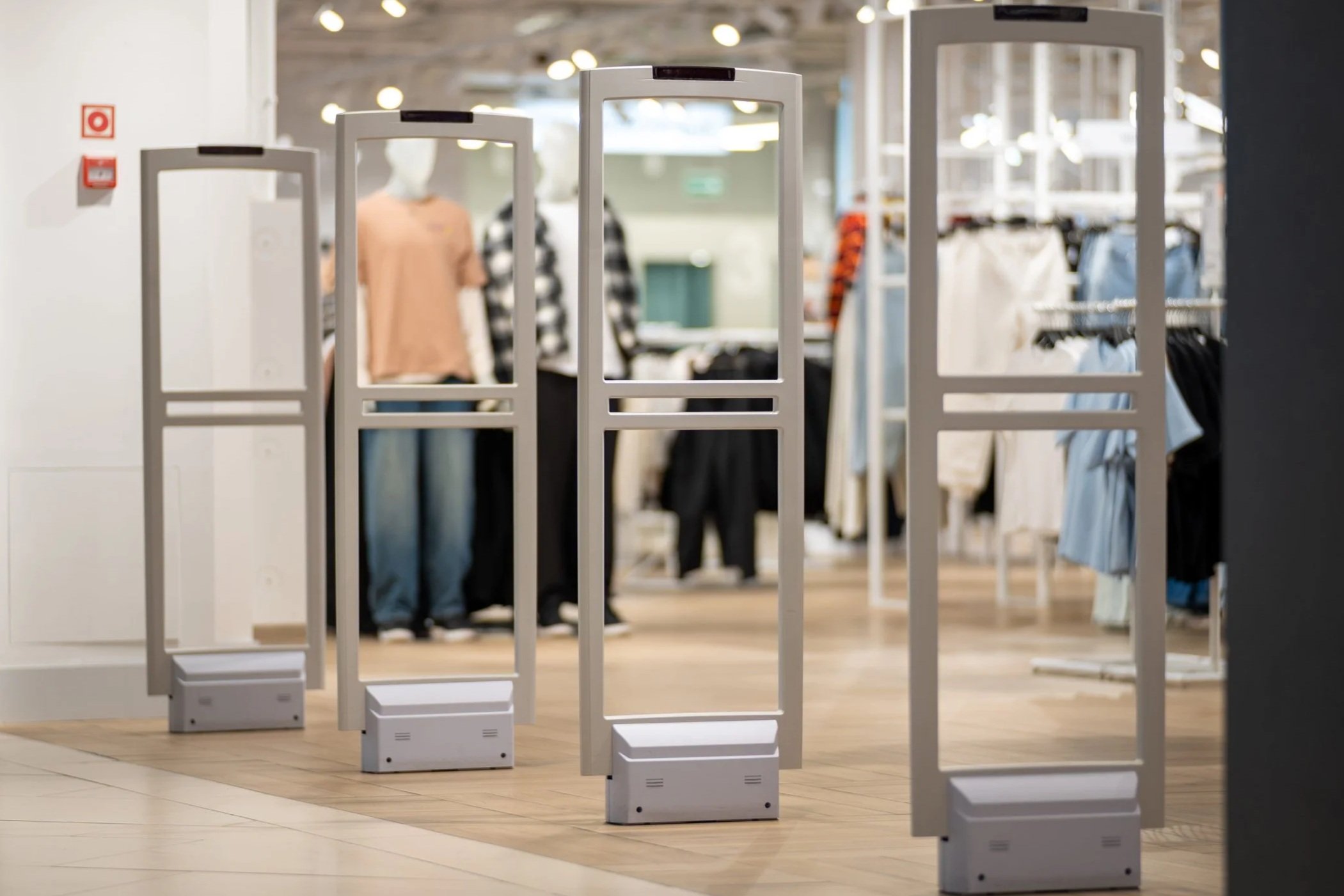
Electronic Article Surveillance (EAS) systems in retail prevent theft and deter shoplifters.
Depending on the products, store, and required level of security, different types of security tags are used. But what’s the difference, and how do you know which is right?
Intrepid Security are here to untangle the tags.
The Science Behind Retail Security
‘Shrink’ is a term used for lost inventory, usually lost by leaving the shop or warehouse without being paid for. ‘Shrink’ has always been a leading problem for retailers, with many ways in place to combat it, from CCTV cameras to trained staff.
Several factors, for instance, the cost-of-living crisis and increased self-checkout tills, have seen shoplifting become a trend. In the UK, retailers lose billions worth of stock each year.
Today, retail security is more important than ever, and understanding the workings of EAS security systems adds another layer of defence.
Radio Frequency (RF) tagging is widely used in retail environments as an effective method for protecting high-volume products. This system operates best in environments with moderate levels of electrical interference. For a high volume of merchandise that needs protecting, it is the cheaper option.
Products like fashion clothing, accessories, glasses and books tend to opt for RF tags as they are commonly stolen, easy to install and maintain, and cost-effective.
Acousto-Magnetic (AM) tagging is a high-performance detection used in retail environments where there is more electronic interference or higher-value targeted merchandise. It is more effective around metals and bustling shops and is the more expensive option for merchandise that needs protection.
For example, tools, electronics, beauty products, jewellery and age-restricted products like alcohol or vapes often use AM security.
Both security systems can be hard, plastic tags or discreet stickers and labels. Depending on the product, the type of tag can act as another layer of security. For example, obvious bottle cap tags on alcoholic drinks will deter thieves, whereas flat labels on jewellery will provide a discreet level of security that wouldn’t discourage valuable customers.
Knowing which type of security tag to use depends on the type of product you're selling, the level of theft, and the surrounding environment.
As an example, a busy electronics store wanting to protect expensive devices will use an AM EAS system, as it works more effectively with the product, environment and priority level of the product.
Intrepid Security’s Solutions
At Intrepid Security, we specialise in designing and installing EAS systems with your security and reputation in mind.
We understand the importance of security, especially on high-value items, but we also understand the value of trust. Customers can be put off by big security tags and bulky security antennas at shop exits.
With that in mind, we offer everything, from standard AM antennas to specialised invisible AM systems. Our Optimum Antenna is fully digital, with the latest technology to ensure accuracy and reliability. Our Concealed Loops offer an invisible EAS system that can be fully integrated into the design of the store. Both provide a robust level of security, following your store’s desired customer face.
Contact us with any enquiries about our EAS systems or how we protect your merchandise with high-level detection technology.